
Built for
COMMERCIAL.
Paint & Epoxy Solutions
Commercial Grade Materials and Application:
We utilize only commercial-grade, US manufactured materials. We work with multiple suppliers to source our materials.
Differentiators to come...

Paint
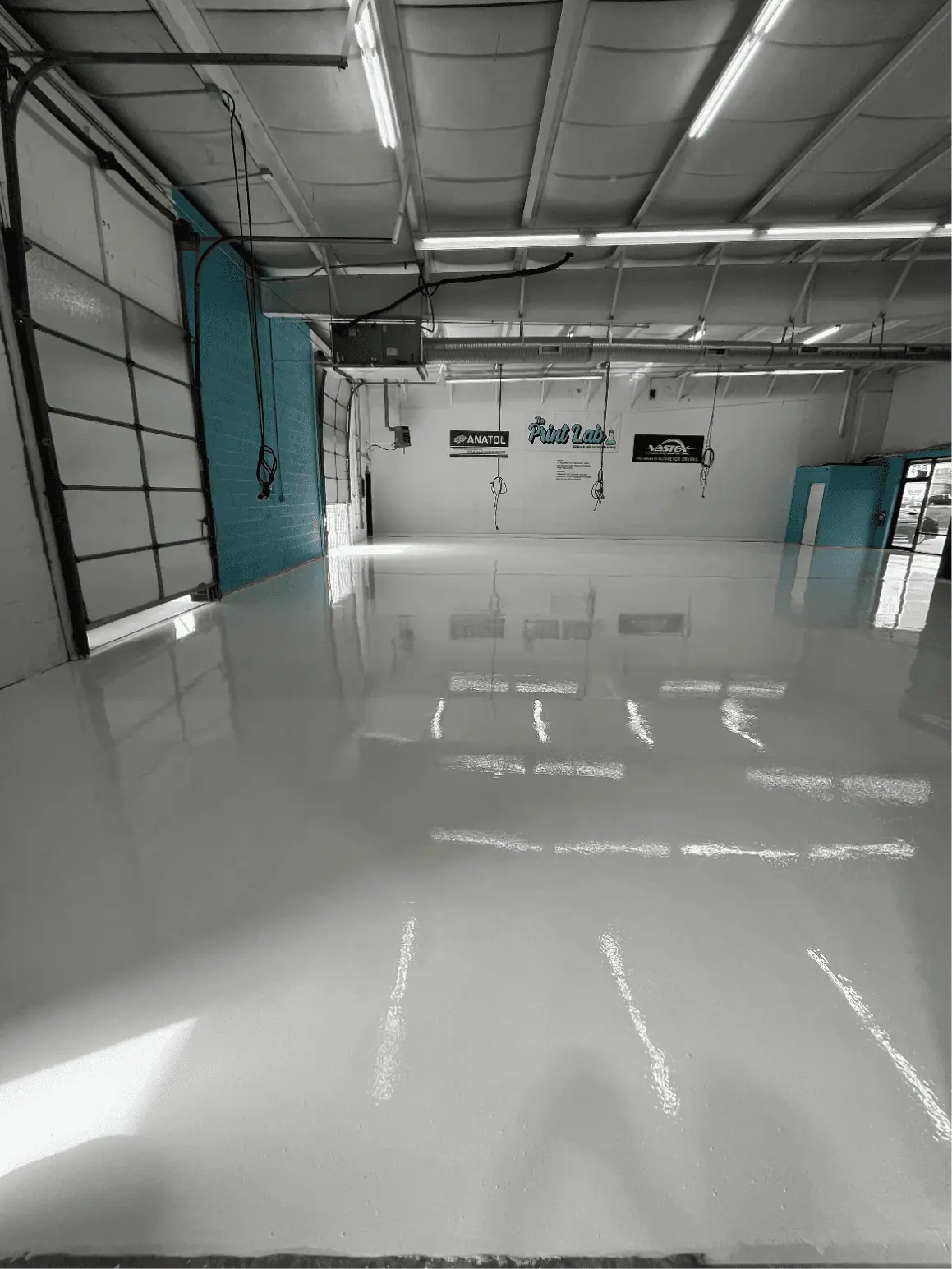
Epoxy
Optional Add Ons:
Cove Base
An epoxy cove base is a critical component in commercial and industrial flooring systems, providing a seamless, curved transition between the floor and the wall.
This installation eliminates sharp corners and hard-to-clean joints, greatly reducing areas where dirt, bacteria, moisture, and contaminants can accumulate.
Key Benefits of Epoxy Cove Base
Hygiene & Cleanability:
The rounded, seamless junction prevents the buildup of microbes, debris, and moisture, making it much easier to sanitize and maintain strict hygiene standards. Epoxy cove bases are especially crucial in environments like commercial kitchens, healthcare facilities, pharmaceutical plants, laboratories, and food and beverage production areas, where cleanliness is strictly regulated.
Moisture and Water Protection: By forming an impermeable barrier at the floor-to-wall connection, epoxy cove bases stop water ingress that could eventually cause wall or floor damage. This helps prevent mold growth and structural issues.
Durability & Impact Resistance:
Built from highly durable epoxy systems, cove bases withstand harsh cleaning, heavy impacts, and chemical exposure without chipping or delaminating. This leads to long service life even in the most demanding applications.
Regulatory Compliance:
Epoxy cove bases help facilities comply with health and safety codes, such as USDA or FDA requirements, which mandate seamless, easily cleanable surfaces in areas where food is processed or where hygiene is critical.
Aesthetic Integration:
Options include various heights (commonly 4–6 inches) and colors to match facility design and branding, as well as pre-formed and hand-troweled installation types for faster, more consistent results.
Typical Applications
- Food and beverage facilities, commercial kitchens, and processing areas
- Healthcare and pharmaceutical environments
- Laboratories, washrooms, showers, and locker rooms.
- Storage, packing, and industrial manufacturing spaces
Installation & Materials
Epoxy cove base systems are installed after mechanical preparation of the substrate, using specialized trowels or pre-formed coves.
Concrete Densifier
Concrete densifiers are specialized chemical treatments that fortify, reduce porosity and harden concrete surfaces, making them a vital component in commercial and industrial flooring
systems—especially sealed and polished concrete finishes.
Key Benefits for Commercial & Industrial Settings
Big Boost in Surface Hardness:
Densified concrete floors become much more resistant to abrasion, scratching, impact, and wear—even under heavy machinery or vehicle traffic. This toughness means less maintenance and fewer repairs over time.
Superior Dust Control:
By locking up loose particles, densifiers dramatically reduce the problem of concrete dusting. This not only improves cleanliness and air quality, but also protects equipment and inventory in warehouses and manufacturing settings.
Improved Stain and Moisture Resistance:
A denser, less porous floor resists the penetration of oils, chemicals, and water, minimizing stains and making cleaning fast and straightforward. While densifiers do not make concrete fully waterproof, they offer substantial resistance when
paired with a commercial-grade sealer.
Enhanced Longevity:
Concrete that is densified and maintained properly can last far longer than untreated slabs, offering greater return on investment for facility owners. Floors stay strong and attractive for years, even in demanding environments.
Eco-Friendly & Safe:
Many commercial densifiers are low- or zero-VOC, minimizing environmental impact and making them safe for use in enclosed spaces.
Typical Applications
- Warehouses and logistics centers
- Manufacturing plants
- Retail stores and automotive facilities
- Public venues
Professional Application & Performance
- Densifiers are typically applied after mechanical grinding or surface prep, ensuring deep penetration and even reaction with concrete pores.
- Unlike surface coatings, densifiers don’t alter the appearance of the floor dramatically—they work from within to build up resilience and sheen, especially
when floors are polished. - Many densifiers are compatible with subsequent sealers, adhesives, or coatings,
making them a versatile option for multi-step commercial floor systems.
Floor Wax
Floor wax is a vital component in the ongoing care of commercial and industrial flooring systems. Whether your facility has VCT, linoleum, concrete, stone, or even sealed epoxy flooring, professional-grade wax plays a critical role in enhancing durability, safety, and overall appearance.
Key Benefits for Commercial/Industrial Settings
Enhanced Protection:
Floor wax acts as a buffer, absorbing abrasions, scuffs, stains, and chemical
spills. It protects flooring from heavy foot and equipment traffic, prolonging the life
of the underlying materials—whether concrete, stone, or tile.
Aesthetics & Professionalism:
Wax creates a high-gloss or satin sheen, restoring a polished look and making
your facility more welcoming and professional. Clean, shiny floors enhance customer impressions and reflect a commitment to maintenance and safety.
Skid Resistance:
When properly applied, many industrial waxes include non-slip properties, reducing the risk of slips and falls in high-traffic areas, kitchens, retail
environments, and production floors.
Ease of Cleaning:
The sealed, smooth surface created by waxing makes routine cleaning simpler
and faster—spills, dust, and debris are easily wiped away. This also reduces the
need for harsh chemicals and frequent deep cleaning, lowering maintenance
costs.
Cost-Effective Longevity:
Regular reapplication and maintenance of floor wax dramatically extend the
floor’s lifespan. With proper care, wax coatings can last from 6 months up to two years depending on traffic and conditions, significantly reducing the need for costly repairs or replacement.
Environmental and Operational Benefits:
Waxing helps improve indoor air quality by minimizing dust, reduces water and chemical usage during cleaning, and boosts light reflectivity further contributing to energy savings in brightly lit commercial and industrial buildings.
Typical Applications
- Warehouses, manufacturing plants, and logistics centers.
- Retail stores, malls, and showrooms.
- Hospitals, schools, and office buildings.
- Food production, kitchens, and restaurants.
Moisture Vapor Barrier
A moisture vapor barrier (MVB) is a critical component in professional epoxy flooring
systems for commercial and industrial settings. It is a specially formulated coating—most often a 2-part, 100% solids epoxy—applied directly to properly prepared concrete subfloors to prevent moisture vapor from migrating upward into the flooring system above.
Why Use a Moisture Vapor Barrier?
Prevents Flooring Failures:
Moisture vapor rising from concrete slabs is a primary cause of epoxy floor problems, including bubbling, blistering, delamination, and adhesive failures. An MVB stops these issues at the source by forming an impermeable seal on the
slab.
Enhances Floor Longevity:
By controlling vapor transmission (even in slabs with high moisture emission rates of up to 20–25 lb/24hr/1,000 sq ft), MVBs help extend the life of epoxy, urethane, tile, or carpet systems and ensure warranty compliance.
Protects Against Mold and Mildew:
Blocking moisture protects not just the coatings but also the indoor environment—preventing mold and mildew beneath finished floors.
Compatibility:
Modern MVBs are engineered to work underneath a variety of floor coverings and coatings, including polymeric systems, VCT, LVT, and more.
How Moisture Vapor Barriers Work
- Moisture vapor barrier epoxy coatings penetrate open pores of the concrete and cure into a continuous, highly resistant membrane.
- When properly applied after surface prep (such as diamond grinding or shot-blasting), these barriers reduce vapor emissions to below required levels for most commercial flooring systems. Many professional MVBs meet or exceed ASTM F3010 standards for vapor permeance, which verifies their effectiveness in high-moisture environments.
- Fast installation and curing means minimal downtime for businesses; barriers can often be installed and ready for further flooring within a day.
Typical Applications
- Warehouses, production spaces, and logistics centers.
- Food processing and commercial kitchens.
- Retail spaces, medical facilities, and laboratories.
- Basements and areas with known high slab moisture.
Key Benefits
Reduces risk of costly floor failures
- Supports a healthier, mold-free environment
- Works with a wide variety of flooring systems
- Improves the long-term durability and value of flooring investments
Joint & Crack Repair
Joint and crack repair is an essential service in commercial epoxy flooring, delivering structural integrity, safety, and long-term performance.
Types of Repairs
Joint Fillers:
Joint fillers are used in control and expansion joints to support joint edges, protect against spalling, and allow for slight movement caused by concrete
shrinkage or traffic. Semi-rigid fillers help prevent joint deterioration while providing enough flexibility to accommodate minor slab movement.
Crack Repairs:
Two-part crack fillers or repair mortars are used to fill and "weld" cracks, spalls, pop-outs, and surface defects—even on vertical surfaces.
Key Features & Benefits
Permanent Repairs:
Industrial epoxy and polyurea products create durable fixes, often becoming stronger than the original concrete once cured. Repairs can withstand heavy forklift or machinery traffic within a short time—sometimes less than an hour.
Smooth Integration:
Once repaired, the surface can be immediately ground, sanded, or coated, ensuring a flawless transition from repair to final epoxy or resin floor installation.
Versatility:
Epoxy repair systems can address everything from minor chips to significant
structural flaws, accommodating a wide range of facility needs and environmental challenges.
Fast Turnaround:
Many products are fast-setting, enabling rapid return to service and minimizing operational downtime for commercial and industrial clients.