
Epoxy Over Existing Tile: An Economical Flooring Solution
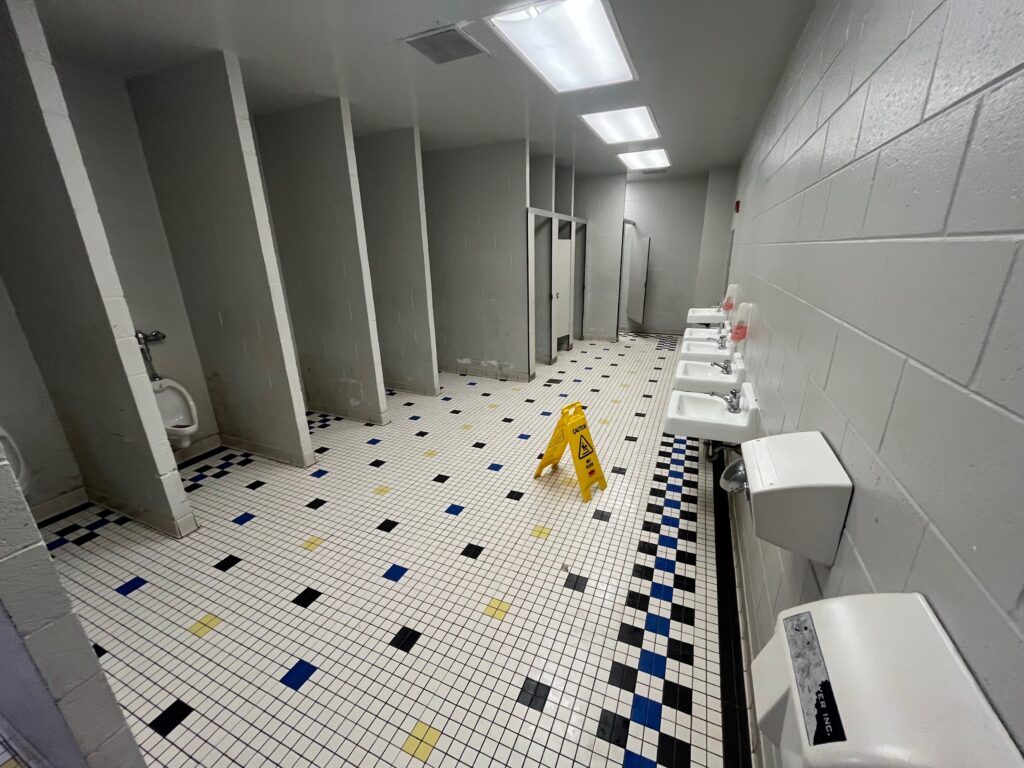
- Save money: Avoid costly tile demolition, disposal, concrete repairs, and much of the
self-leveling required after tile removal. - Minimize downtime: Coating over sound existing tile can significantly shorten the
flooring renovation process and get your facility back in service faster. - Create a seamless, durable floor: A properly installed Wolverine Coatings system transforms existing tile into a seamless, easy-to-maintain resinous floor.
Why Put Epoxy Over Existing Tile?
Replacing tile can be expensive and disruptive. Once tile is removed, the concrete underneath may require grinding, patching, and self-leveling before a new floor can be installed. If the existing tile is sound, well-bonded, and in good condition, removing it may not be necessary. A properly prepared tile surface can serve as the foundation for a high-performance epoxy flooring system. This approach can reduce demolition, disposal, labor, material costs, and project downtime.
The Seamless OVT Flooring System
For epoxy-over-tile applications, we have developed a system with our friends at Wolverine Coatings products:
- Primer
A properly selected primer establishes adhesion between the prepared tile and the new resinous flooring system. - Basecoat and Broadcast
A 100% solids epoxy base coat provides a durable, uniform foundation over the prepared tile and grout. Broadcast aggregate adds texture, durability, and slip resistance while helping disguise the original tile and grout pattern. - Second Basecoat and Broadcast
Optional but recommended to insure coverage of tile grout lines so no telegraphing occurs. - Grout Coat
The grout coat locks in the broadcast aggregate, fills voids, and creates a dense, continuous surface. - Optional Urethane Seal Coat
A urethane topcoat can provide additional protection against wear, scratching, and UV exposure while giving the finished floor its final appearance. The exact system and preparation should be selected based on the existing tile, facility
conditions, and intended use of the floor.
- Primer
The Cost Advantage
The biggest savings can come from eliminating unnecessary demolition.
A traditional flooring renovation may involve:
Tile Removal → Disposal → Concrete Grinding → Repairs → Self-Leveling → New Flooring
An epoxy-over-tile project can potentially reduce that process to:
Surface Preparation → BondTite → LiquaTile → Broadcast → Grout Coat → Optional Urethane
That means less labor, less debris, fewer construction steps, and less disruption to the facility.
Faster Return to Service
For commercial and industrial facilities, downtime can be costly. Restaurants, warehouses, manufacturing facilities, and other businesses may not have the luxury of shutting down for an extended flooring replacement. Coating over an existing tile floor can eliminate much of the demolition and substrate reconstruction, allowing the flooring installation to move forward more quickly. The result is a faster path from an outdated tile floor to a new, seamless resinous surface.
Is Epoxy Over Tile Right for Every Floor?
No. The existing tile must be properly evaluated before coating. Loose or hollow tile, significant movement, severe cracking, moisture problems, or other
substrate issues may require removal or additional corrective work. Proper mechanical preparation and attention to grout joints are also critical. The goal isn’t to cover up a failing floor—it is to take advantage of a sound existing floor and transform it into a new, durable surface.
The Bottom Line
When existing tile is in good condition, tearing it out may be unnecessary. An engineered epoxy-over-tile system can provide a durable, seamless floor while potentially
saving substantial money on demolition, disposal, concrete preparation, and self-leveling. If the tile is sound, don’t automatically demolish it—coat over it.